

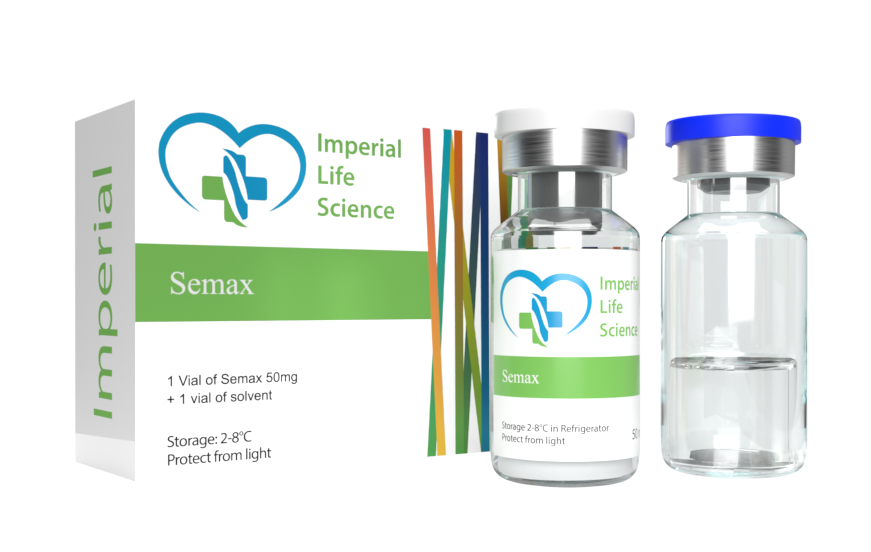
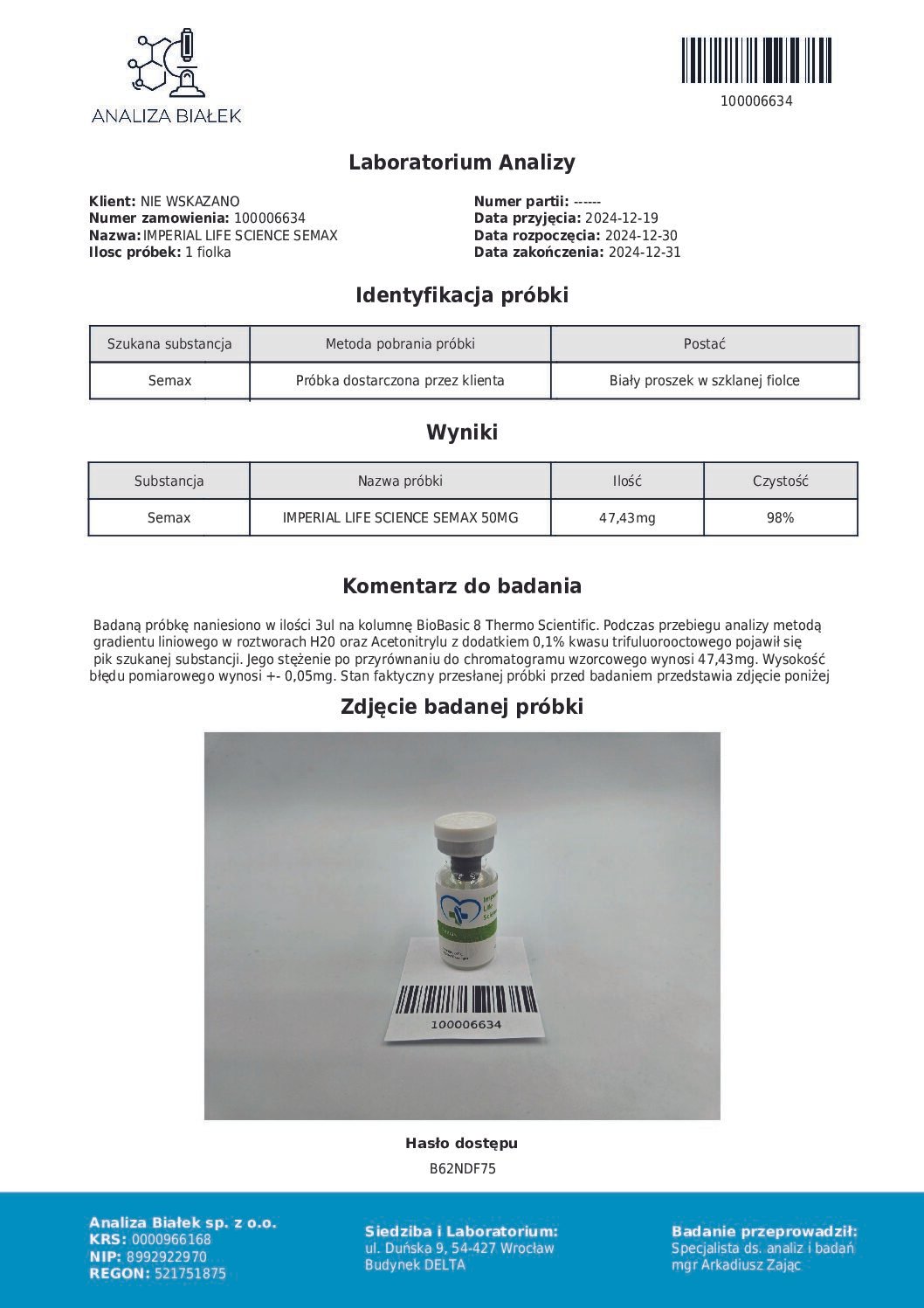
Description
What Is Semax?
Semax is a synthetic peptide derived from the adrenocorticotropic hormone (ACTH) fragment Met-Glu-His-Phe-Pro-Gly-Pro. Unlike ACTH itself, it does not stimulate cortisol release, making it safe for long-term neurological use
It was developed by Russian researchers in the late 1980s and is still manufactured and prescribed in Russia today. Clinically, it is used for:
→ Neuroprotection after ischemic stroke and traumatic brain injury.
→ Cognitive enhancement in patients with memory or attention deficits.
→ Ophthalmology, particularly optic nerve disorders.
→ General nootropic support, including experimental use for learning and focus.
Koroleva, S. V., and N. F. Myasoedov. “Semax as a universal drug for therapy and research.” Biology Bulletin 45.6 (2018): 589-600.
How Semax Works
The mechanism of action is multifaceted, targeting several neurochemical pathways:
→ Neurotrophic factor modulation: Semax upregulates brain-derived neurotrophic factor (BDNF) and related signaling proteins, which support neuroplasticity and memory formation
→ Neuroprotection during stress: It protects neurons under conditions of oxidative stress and hypoxia, limiting cell death after stroke or injury
→ Dopaminergic and serotonergic effects: Animal and human studies suggest Semax modulates dopamine and serotonin pathways, improving mood and motivation
→ Anti-inflammatory properties: Research shows Semax reduces pro-inflammatory cytokines, adding to its neuroprotective role
Bottom line: Semax works by supporting neuroplasticity, enhancing neurotransmitter balance, and protecting neurons, which is why dosing protocols
Dosage:
Low doses (100–300 µg/dose) – recommended for preventative purposes and when the goal is to slightly improve memory, concentration, or alleviate stress.
Moderate doses (300–600 µg/dose) – most often used as adjunctive therapy for mood disorders or during intense periods of study or work, when a stronger cognitive effect is desired.
Higher doses (600–1000 µg/dose and above) – reserved primarily for clinical cases (e.g., after strokes, in neurological disorders). Dose increases should be supervised by a specialist.
Much depends on individual response. It is recommended to start with lower doses and gradually increase them as needed.
Commonly Used Semax Cycles
1. Short Course (most typical)
-
Duration: 5–14 days
-
Frequency: 1–2 times per day
-
Break: Off-cycle for at least 1–2 weeks before repeating
2. Intermittent Use
-
Used only on demanding days, e.g., for focus or stress
-
No fixed cycle—users take it as needed, with days off in between
3. Clinical-style Russian Protocols (for cognitive recovery)
-
Duration: 10–30 days
-
Frequency: 1–3 times per day
-
Break: Usually at least 1 month




Reviews
There are no reviews yet.